
Last updated November 22, 2026
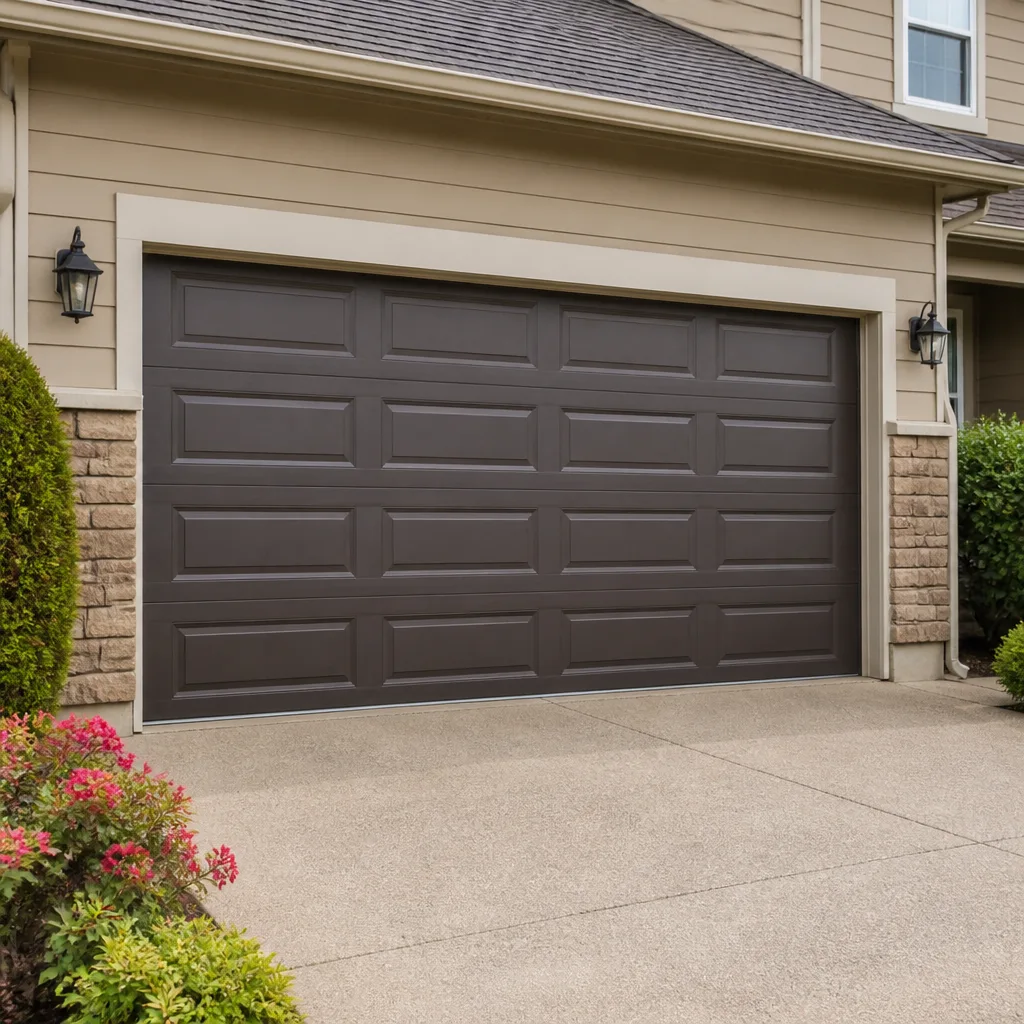 Raised-panel steel
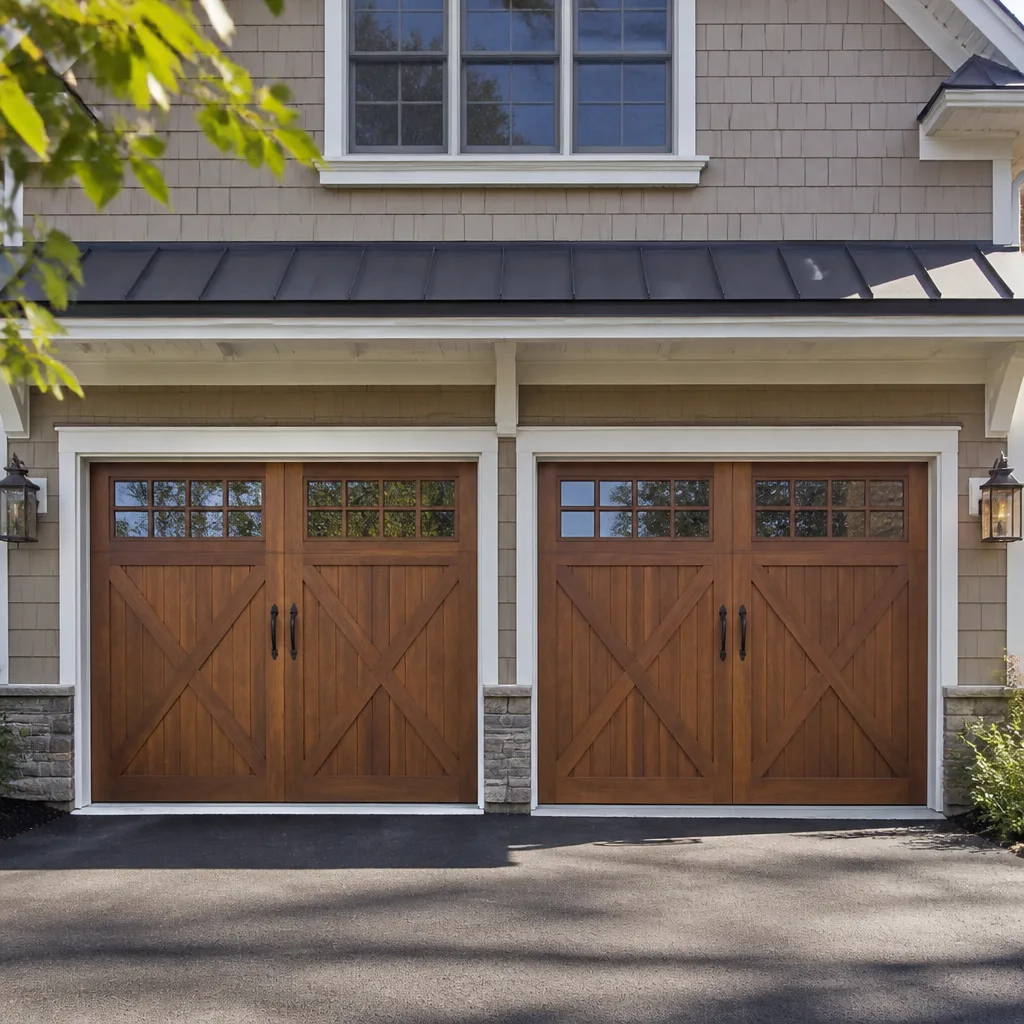 Carriage house
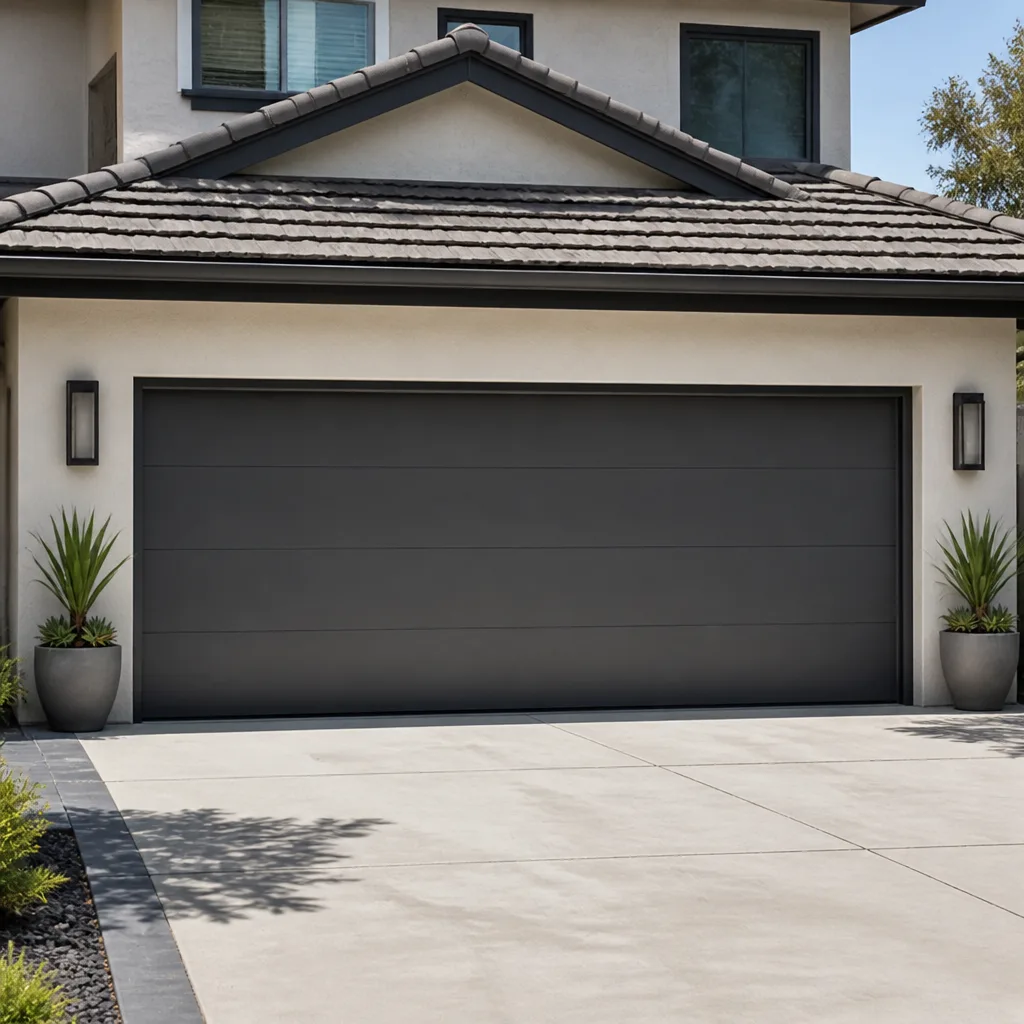 Modern flush
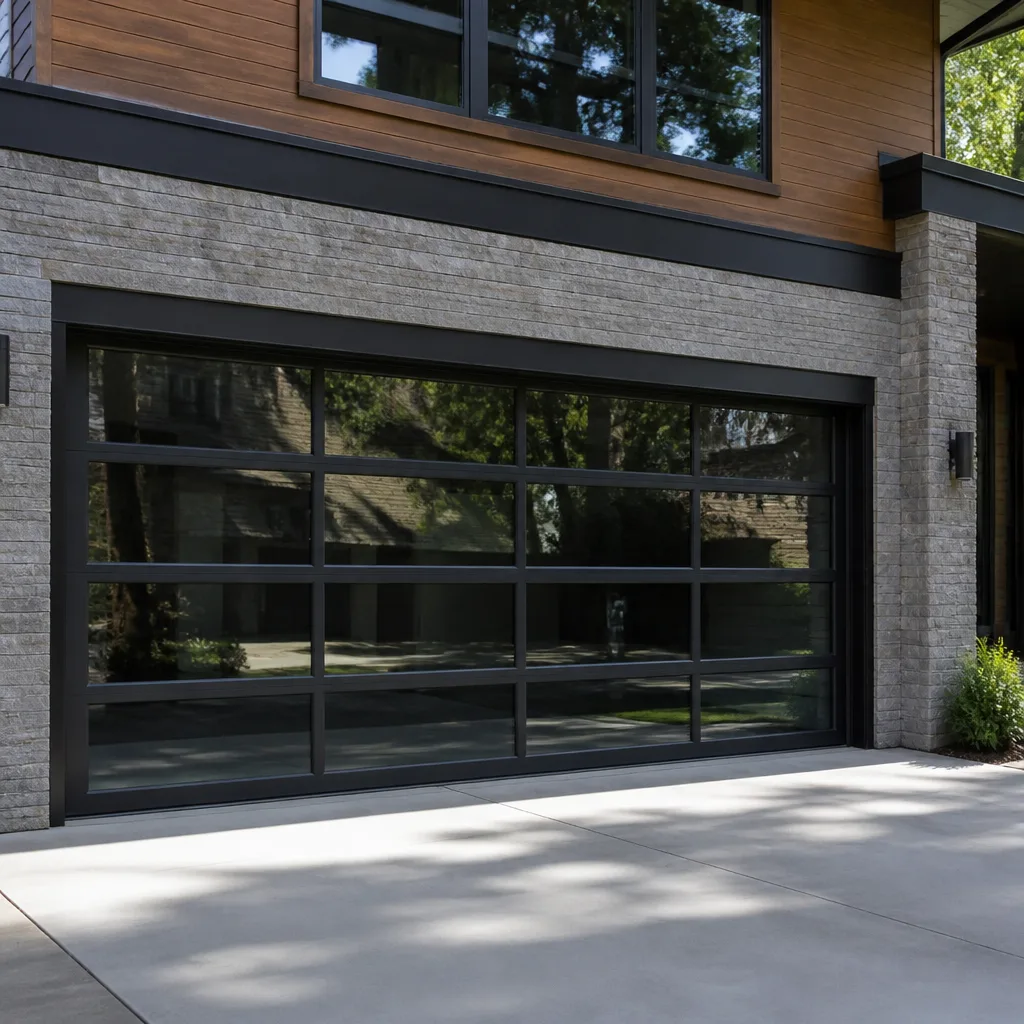 Full-view glass
 LiftMaster openers
 Chamberlain openers
Full 25-point door and opener safety check with every visit - springs, cables, rollers, tracks, and your LiftMaster or Chamberlain opener included
You get a price before we start. It does not change when the pro arrives.
Get your free estimateGarage Door Warning Signs: An Eden Prairie Homeowner’s Reference Guide
A garage door that hesitates for two seconds before it moves is not “just getting old.” That pause is a symptom, and it points to a specific failure in one of four moving systems: the springs, the cables, the opener, or the track and rollers. Which one is failing decides whether your fix is a small adjustment or a full component replacement. Most homeowners wait until the door stops working entirely, and by then the symptom that would have been cheap to correct has usually spread. This guide maps twelve warning signs to their real causes, rates each one for urgency, and explains why Eden Prairie doors behave differently in cold months. Read it once and you’ll know exactly what your door is telling you.
Quick Answer
A garage door gives warning signs weeks before it fails completely, and the most important ones to act on immediately are a broken spring (the door suddenly feels too heavy to lift), a frayed or kinked cable, and any door that drifts back down after you open it. Sluggish movement in cold weather is usually a temperature issue, not a mechanical failure, and can often be corrected without a repair. Noisy operation, uneven travel, and a blinking sensor light sit in the middle: schedule them within a week before they turn into an emergency.
Styles & brands we work with
- Raised-panel steel
- Carriage house
- Modern flush
- Full-view glass
- LiftMaster openers
- Chamberlain openers
Table of Contents
- The 12 Warning Signs and What They Actually Mean
- The Urgency Rating: Stop, Schedule, or Watch
- Cold-Weather Symptoms vs. Real Mechanical Failure
- The Warning Sign Homeowners Blame on the Opener
- Why Attached Garages in Eden Prairie Raise the Stakes
- What Brand You Own and Why It Matters for Diagnosis
- A Simple Monthly Check You Can Do in Two Minutes
- What You Should Never Try to Fix Yourself
The 12 Warning Signs and What They Actually Mean
Most warning sign lists tell you to “get it checked.” That’s not useful. Each symptom below maps to a specific component, and that component determines the cost and the urgency. Read down the table and match what you’re hearing or seeing.
- Loud bang from the ceiling, door suddenly heavy: a torsion spring has snapped. The door becomes unsafe to lift. Stop use immediately.
- Loud bang, door still works but feels unbalanced: an extension spring has broken on one side. Same urgency: stop use.
- Frayed, kinked, or curled cable: the lifting cable is failing. Stop use immediately. This is a snap-back hazard.
- Door opens a few inches then reverses: usually a sensor alignment issue or a travel-limit setting, not a spring failure. Schedule within a week.
- Door drifts back down after opening: the springs have lost tension or the opener’s limit is set wrong. Schedule soon.
- Grinding or squealing during travel: worn rollers, dry hinges, or a bent track. Cosmetic to low urgency, but address it before it wears the opener.
- Uneven travel (one side higher than the other): a stretched cable or a track out of plumb. Schedule within a week.
- Door shakes or vibrates: loose hardware or a failing roller. Low urgency, easy fix.
- Opener motor runs but door doesn’t move: the drive gear or the chain/belt coupling has failed, or the manual release is engaged. Schedule.
- Sensor light blinks and door won’t close: obstruction, misalignment, or a failing sensor. Usually a five-minute check.
- Bottom seal gap or daylight under the door: a worn seal (weather issue) or a door off its track (mechanical). Determine which before calling.
- Opener light flashes a fault code: modern openers report specific faults. Check your manual, or call with the code ready.
Notice how many of these are not about the door itself. Half of them are opener or sensor signals. That’s why a proper diagnosis starts with the symptom, not the component. A door that grinds is not a candidate for a new opener. A door that drifts is not a candidate for a new door. Matching symptom to cause is the whole game, and it’s the first thing our technicians do when they arrive.
The Urgency Rating: Stop, Schedule, or Watch
Every warning sign should be sorted into one of three tiers. This is the fastest way to know whether to call today, this week, or just keep an eye on it. Getting the tier wrong is the most common reason homeowners end up with a bigger bill than they needed.
Stop Using the Door Immediately
These are the signs that mean a component is already in a failed state. The door may still move, but only because the second spring, the cable, or the track is carrying load it was never designed to carry alone. Stop, and call.
- Broken spring (either torsion or extension)
- Frayed or kinked lifting cable
- Door drifting back down after opening
- A door that feels unusually heavy to lift by hand
- Visible bend or separation in a track after a bump or impact
On any of these, the safest move is to leave the door closed, engage the manual release if it’s safe to do so, and call. This is exactly the scenario emergency service exists for. We treat spring work as a dedicated service for a reason: it’s the category most likely to cause serious injury when attempted without the right tools and training.
Schedule Within a Week
These symptoms aren’t emergencies, but leaving them alone accelerates wear on other components. A worn roller eats into a track. A worn drive gear strips out the opener. Week-by-week these compound.
- Grinding or squealing during travel
- Uneven travel
- Opener runs but door doesn’t move
- Door reverses before hitting the floor
- Consistent fault-code blinking
Watch and Adjust
Some signs are informational. A slightly noisy door on a cold Minneapolis-area morning is not the same as a grinding door in July. A bottom seal that gaps in January may close tight by April. Watch these and check again next month.
- Minor noise in cold weather only
- Bottom seal gap that appears only when the temperature drops
- Opener light that stays on slightly longer than usual
Cold-Weather Symptoms vs. Real Mechanical Failure
An attached garage in Eden Prairie does not stay warm. Even with insulated walls and a door that’s rated for the climate, the space drops close to outdoor temperature on a Minnesota night, and that changes how every lubricated surface and every seal behaves. The result is that some symptoms in January would be an emergency in July, and some symptoms that look alarming are actually just cold-weather behavior.
Cold-Weather Symptoms (Usually Not a Repair)
- Sluggish opener travel. The motor and the drive mechanism move slower when the temperature drops. If the door eventually opens fully and closes fully, it’s likely a temperature issue. Some openers have a force adjustment that a technician can set seasonally.
- Stiff manual lift. Cold grease in the hinges and rollers creates drag. If the door is still fairly light to lift by hand, it’s cold-related.
- Bottom seal gap. The rubber seal stiffens and pulls away from the floor. It usually relaxes when it warms up. If it stays open year-round, it’s time to replace the seal.
- Slightly slower reversal test. The auto-reverse should still work, but the door may stop a fraction later in cold weather. If it fails to reverse at all, that’s a real repair.
Real Mechanical Failure (Needs a Repair)
- Door still feels very heavy when cold. Cold makes a door slightly stiffer, not dramatically heavier. A door that feels like it weighs twice what it used to has a spring problem, not a weather problem.
- Loud bang. That’s a spring breaking, typically on the coldest morning of the year when metal is at its most brittle.
- Door won’t stay in the fully open position. Cold slows travel but doesn’t reverse direction. That’s a spring or limit-setting issue.
- Grinding noise in any temperature. If it happens warm, it happens cold; the cause is mechanical.
Distinguishing these two groups before you call matters, because it changes the conversation. If your Eden Prairie door hesitates but still cycles fully, a force adjustment may be all it needs. If it’s heavy by hand or drifting back down, you’re looking at a spring repair, and that’s a different job with a different quote. When in doubt, describe the symptom to us over the phone. Our technicians have up to 12 years of experience diagnosing exactly this distinction, and we’ll tell you which group you’re in before we book anything.
The Warning Sign Homeowners Blame on the Opener
There is one warning sign almost every homeowner misreads, and it costs them a new opener they didn’t need. The sign is: grinding, sluggish, or struggling opener that seems to be working too hard to move the door.
The instinct is that the opener is dying. The reality, most of the time, is that the door has become heavier than it used to be because a spring has lost tension, and the opener is doing work the springs were designed to do. The springs carry the weight of the door. The opener only needs to lift a balanced door a few inches of travel; without that balance, the opener is fighting gravity the whole way.
This matters for two reasons. First, replacing a failing opener without fixing the underlying spring problem means the new opener will be doing the same overloaded work, and it will fail much faster than it should. Second, and this is the part that’s easy to miss: an opener that’s fighting a heavy door can eventually strip its own drive gear or burn out its motor, which turns a spring repair into a spring-and-opener repair.
Any time your opener seems to be struggling, the first question is not “which opener should I buy?” It’s “why is the door so heavy?” A trained technician can answer that in a few minutes by lifting the door by hand with the opener disengaged. If it’s heavy, it’s a spring issue. If it lifts easily and the opener still struggles, then you’re looking at garage door opener repair, and we can diagnose it properly.
The same trap exists in reverse. A door that grinds is not a candidate for a new opener. A door that reverses early is not a candidate for a new spring. Symptom-to-cause matching is what saves the money.
Why Attached Garages in Eden Prairie Raise the Stakes
Nearly every garage door in an Eden Prairie residential neighborhood is attached to the house, and that changes what a failing door means compared to a detached garage in a milder climate. Three specific reasons.
It’s a Security Boundary, Not Just a Convenience
An attached garage door is a direct access point into your home. A door that’s forced open, a door that hangs crooked after a track bend, or a door that won’t close all the way is a security issue, not just a scheduling annoyance. This is why we rate a bent track or a door that won’t latch shut as a “stop” symptom, not a “watch” symptom. In Eden Prairie, where the door is the largest opening in the house, this is the sign homeowners most often under-rank.
It’s the Door Everyone Uses
In a Minnesota winter, the front door often becomes ceremonial. The garage is where people come in from the car, where boots come off, where the dog goes out. A door that hesitates in January is a door that gets used dozens of times a day, and the wear compounds. A symptom that would be minor on a rarely used front door is a genuine nuisance on an attached garage door in Eden Prairie.
It’s the Door That Gets the Cold
Insulated or not, an attached garage in Eden Prairie experiences real Minnesota temperature swings. The door panels expand and contract with the seasons, the seals stiffen and relax, the springs see broad temperature ranges. That’s why cold-vs-mechanical is worth learning, because the answer changes with the calendar. It’s also why the seal and the balance are the two things worth checking monthly.
What Brand You Own and Why It Matters for Diagnosis
Not every brand fails the same way. The warning signs overlap, but the specific part that’s likely to be the culprit, and the specific replacement parts, vary. We work with eight of the most widely installed residential brands, and that includes the ones most common in Eden Prairie homes: LiftMaster, Chamberlain, Genie, Clopay, Amarr, Wayne Dalton, Craftsman, and Raynor.
Here’s what that means in practice for a warning sign you might be noticing right now:
- A Wayne Dalton door with a bottom seal that gaps in cold weather is a different conversation than a Clopay door doing the same, because the seal profile and the track design differ.
- An Amarr or Raynor door that travels unevenly is usually a track or cable issue rather than a panel issue, and the panels are heavier on some models, which makes the balance check more important.
- A Craftsman opener that runs but won’t move the door points to the drive gear or the manual release more often than to the motor.
- A LiftMaster or Genie opener showing a fault code is telling you exactly what’s wrong if you have the code. The lights blink in patterns, and the pattern is diagnostic.
Knowing the brand on the door and the opener before we arrive is what lets us show up with the right parts on the ticket and the right diagnosis in the first conversation. That’s why we ask for the brand and any fault code when you call. It genuinely shortens the visit, and it’s the difference between one trip and two.
A Simple Monthly Check You Can Do in Two Minutes
Most garage door warning signs are detectable before they cause a failure if you check the four simple things on this list once a month. None of it requires any tools and none of it puts your hands anywhere dangerous.
- The lift test. Disengage the opener with the manual release (usually a red handle hanging from the opener track). Lift the door with one hand to about waist height. Let it go. It should rise slightly and stay put. If it feels heavy, drifts down, or falls, the springs are failing. Engage the opener again right away and call.
- The bounce test. With the door fully open, look down along the bottom edge. The gap between the bottom of the door and the garage floor should be even across the width. An uneven or opened gap is a seal or balance issue.
- The eye test. Stand where the sensor beam crosses the opening. Make sure the indicator lights on both sensors are solid, not blinking. Wipe the lenses if they look dusty. If a light blinks with nothing in the beam, the sensor or the wiring needs attention.
- The ear test. Listen while the door moves. Any grinding, squealing, or banging is worth noting. Any new sound compared to last month is worth noting.
That’s it. Two minutes, no tools, and you’ll catch most of the twelve warning signs long before they turn into a door that won’t open on a -10 degree Eden Prairie morning. If you find something on the list, call us and describe what you noticed. We’ll tell you which urgency tier it belongs in. For any repair work, that conversation is the start of the free estimate.
What You Should Never Try to Fix Yourself
We encourage homeowners to check for warning signs. We strongly discourage homeowners from touching three specific components, and it’s worth being direct about why.
Do not touch the springs. Torsion springs are under extreme tension. Releasing that tension without the right tools and training, or losing control of it partway through a repair, causes serious injury. Extension springs are under the same tension, and the cables that run through them can snap. This is why spring work is a specialty and why we treat it that way. Diagnosis is safe. Repair is not. A trained pro has the right winding bars and the safe sequencing, and that’s the difference between a repair and an ER visit.
Do not try to straighten a bent track. Track repairs involve the full weight of the door. A panel or track that’s under load and gets bent the wrong way can release suddenly and drop the door. If your track is visibly bent, engage the manual release if it’s safe and call. Don’t try to lever it back into place.
Do not attempt to fix a frayed cable. A cable under load is one of the most dangerous parts in a garage door system. Even looking at a frayed cable closely, a snap-back is possible. Leave it alone and call.
The good news is that the simple monthly check above covers nearly all the diagnostic ground without requiring you to touch any of these three components. Your job is to notice and describe. Our job is to fix it correctly. That split keeps you safe and keeps the repair from turning into a bigger repair.
When you’ve got a stopped door, our emergency service exists for exactly that. We can talk through the symptom over the phone, and where the situation warrants it, we’ll get a technician out the same day.
Common Mistakes to Avoid
- Replacing the opener because it seems to be struggling. Struggling is usually a symptom of a heavy door, not a failing opener. Have the balance checked first, before spending on an opener that will just fail again.
- Ignoring a single loud bang on a cold morning. A broken spring often announces itself with one sharp pop, not a crash. If you heard a bang and the door feels heavy afterward, stop using it. Don’t assume it was “just the cold.”
- Unplugging the opener and forgetting about it. Once the door is off for a spring or cable failure, the household is functioning on manual doors. It’s easy to put off. But the failure that stopped the door doesn’t resolve, and the longer a bent track or frayed cable goes untouched, the more of the surrounding hardware it takes with it.
- Treating a cold-weather hesitation as a repair. In Eden Prairie in January, a slower opener is often normal. Have it checked before booking a service call. A seasonal adjustment is cheaper than a repair.
- Trying to lift a heavy door by hand to “test it.” The lift test is exactly this, but it needs to be done carefully, standing safely, with the opener disengaged, and it needs to stop if the door won’t stay put. Don’t force it. If the door resists, the test is done and you’ve got your answer.
- Assuming a bottom seal gap means a new door. It usually means a seal replacement, which is one of the smaller jobs on the list. Read the symptom carefully before shopping for a new door.
- Ignoring the track after a bump. A car bumper against the track is a common cause of a bent track in a tight Eden Prairie two-car garage. It doesn’t always show up right away. If your door starts to travel unevenly a few days after a fender-bender in the garage, that’s the culprit.
See the difference
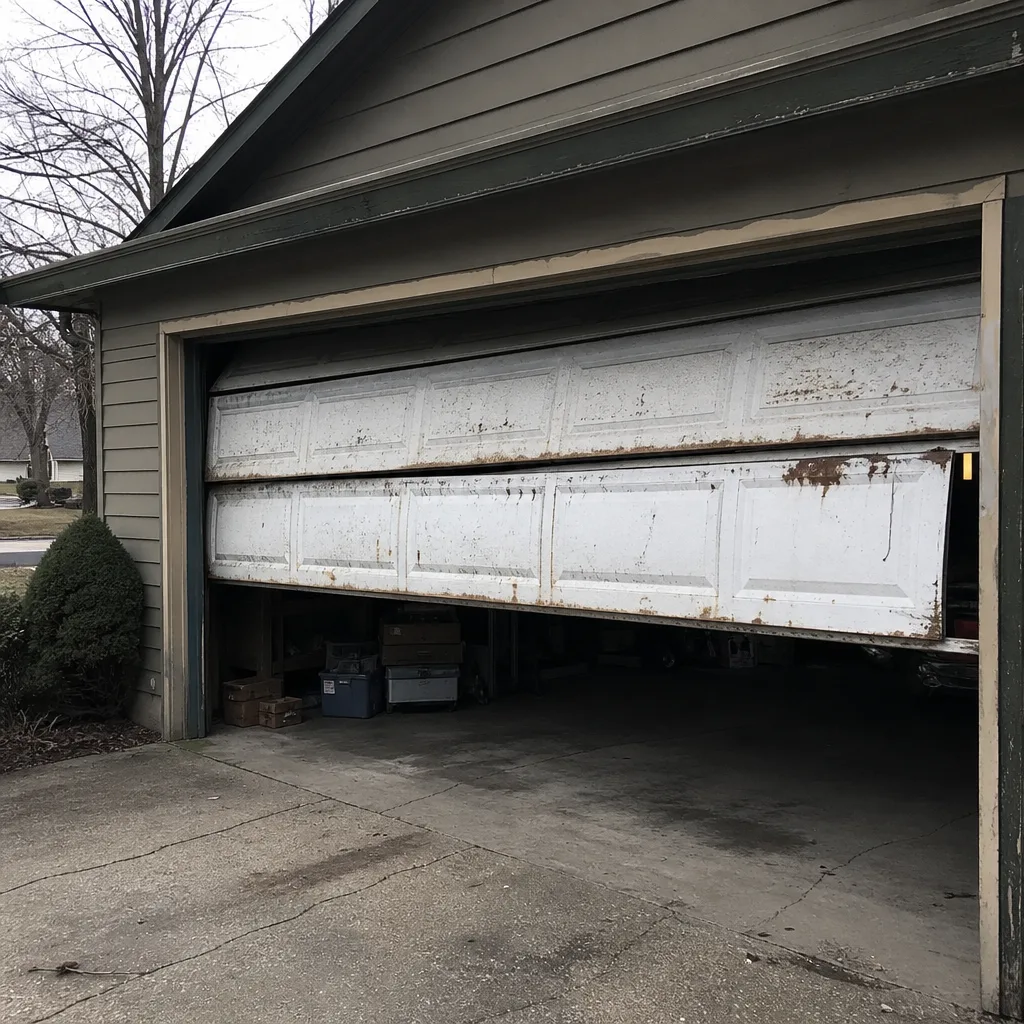 Before
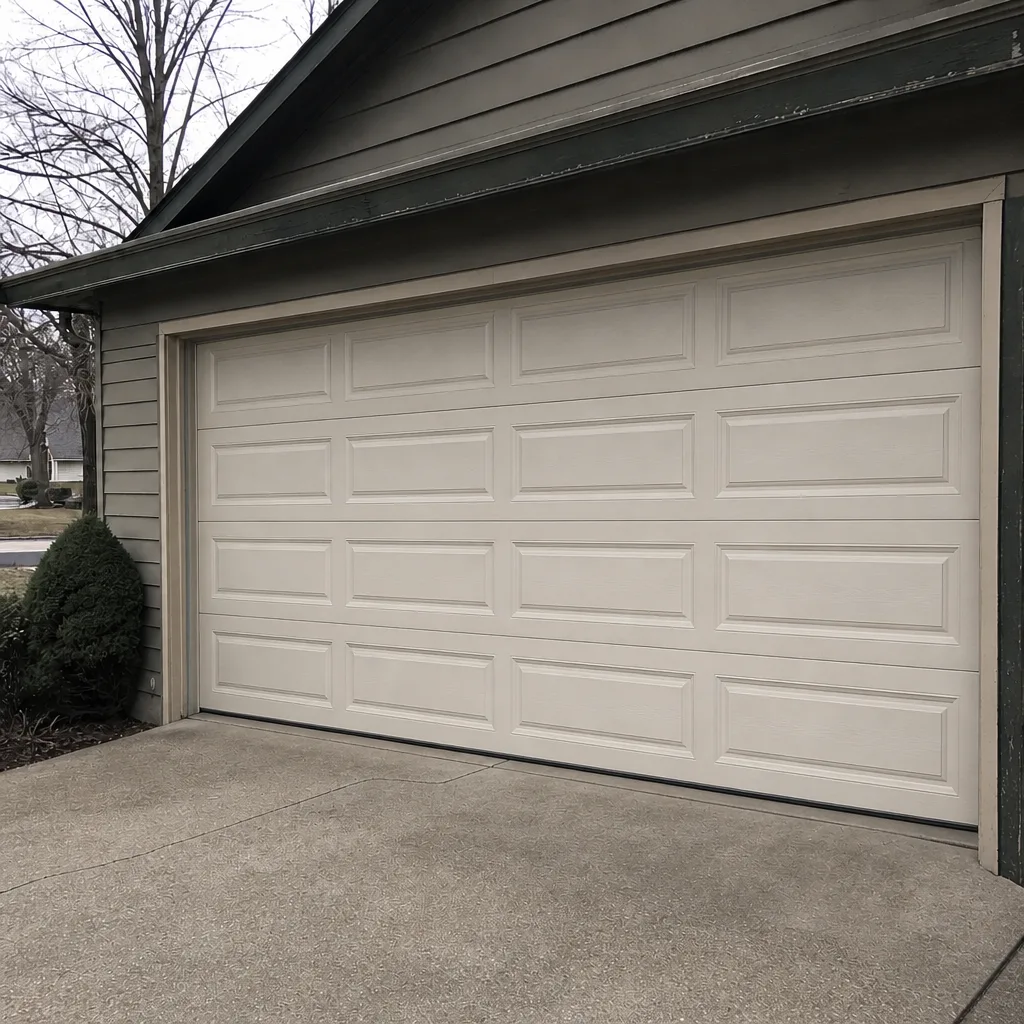 After
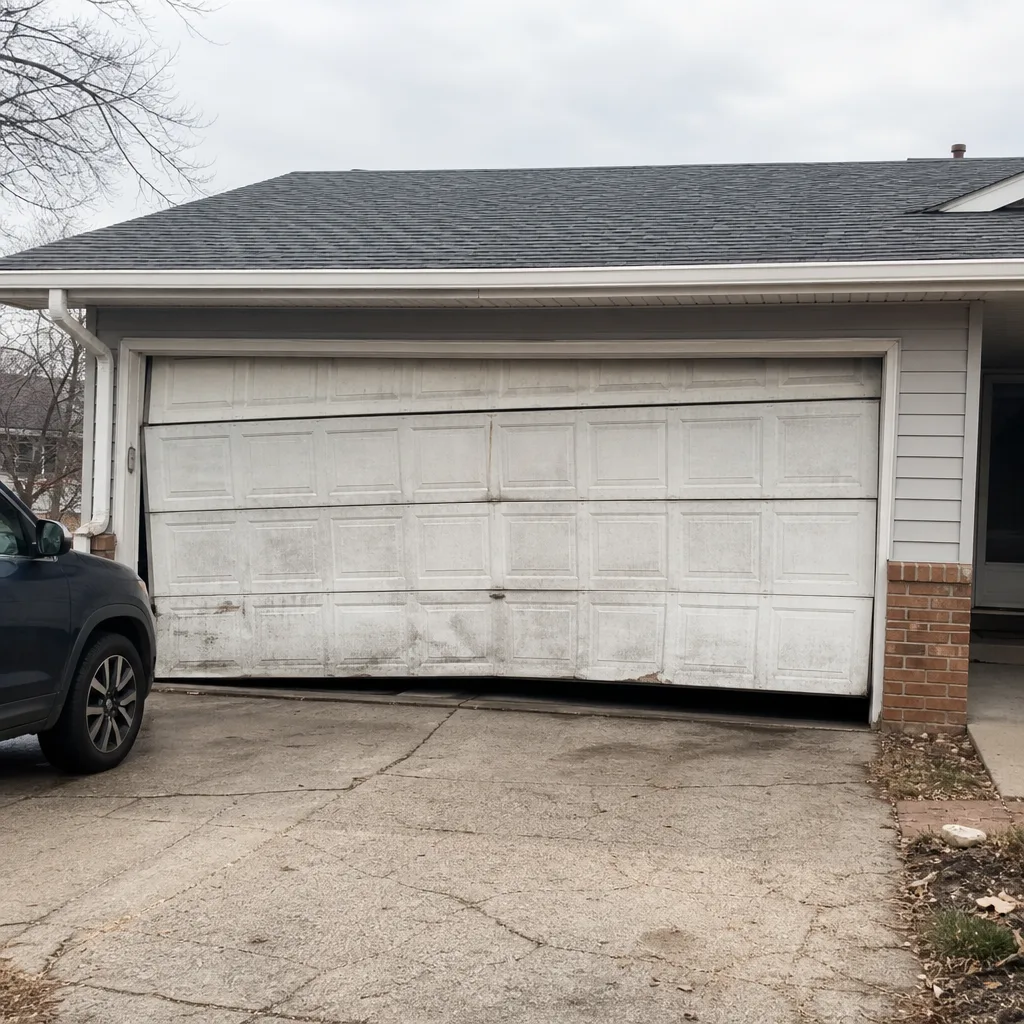 Before
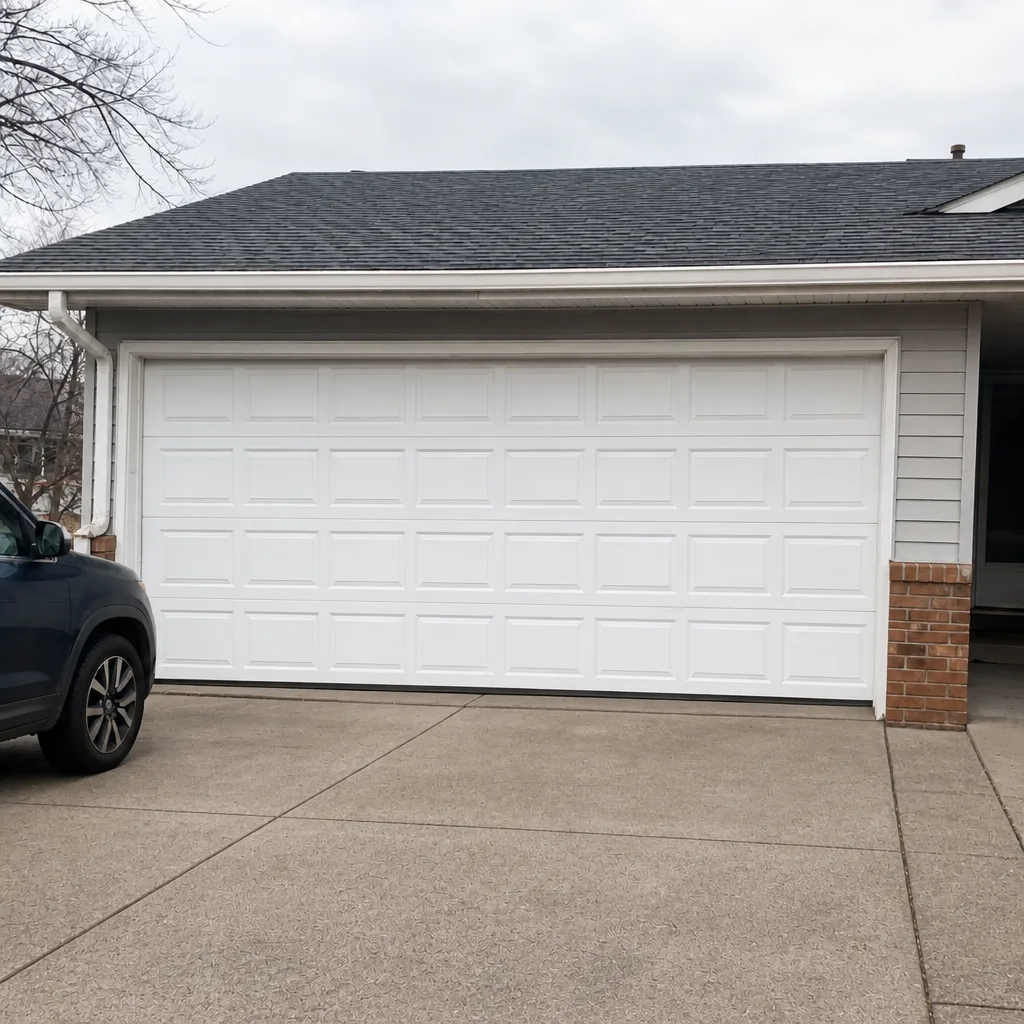 After
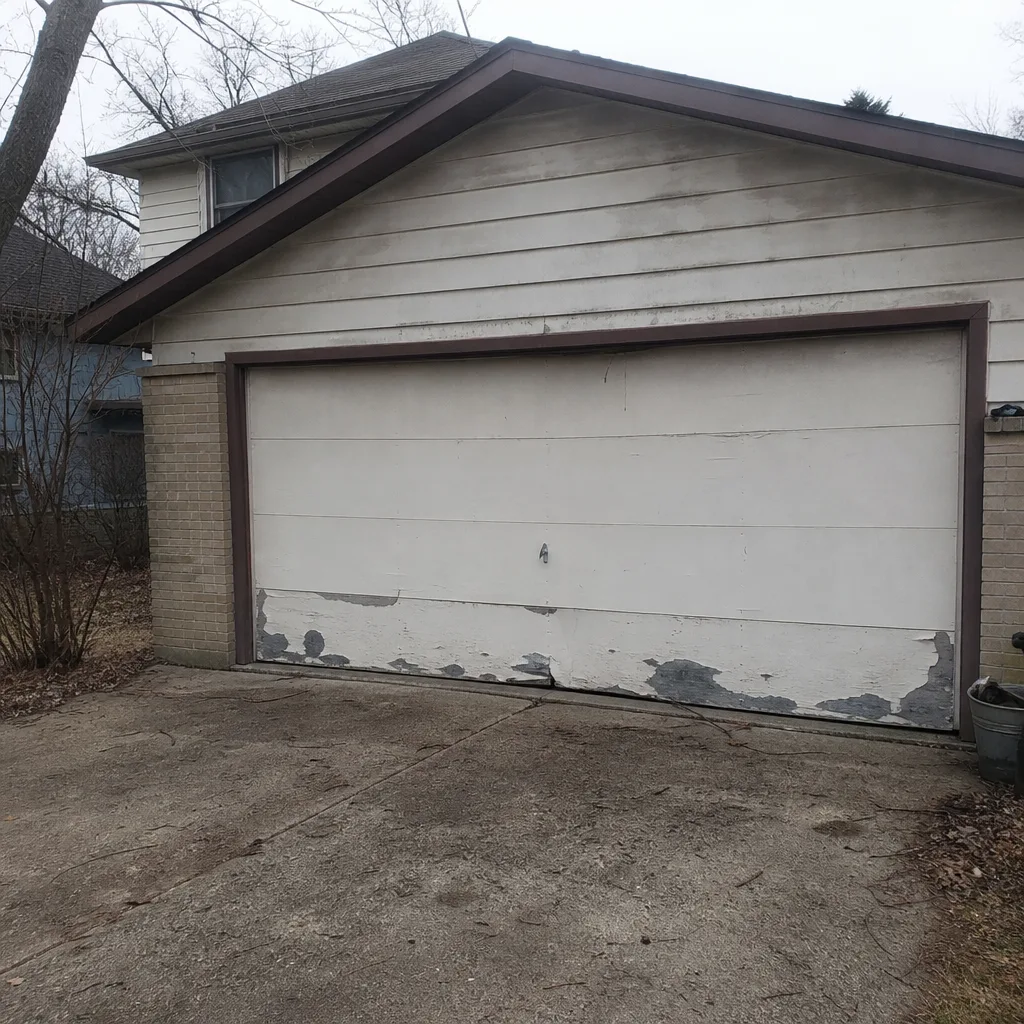 Before
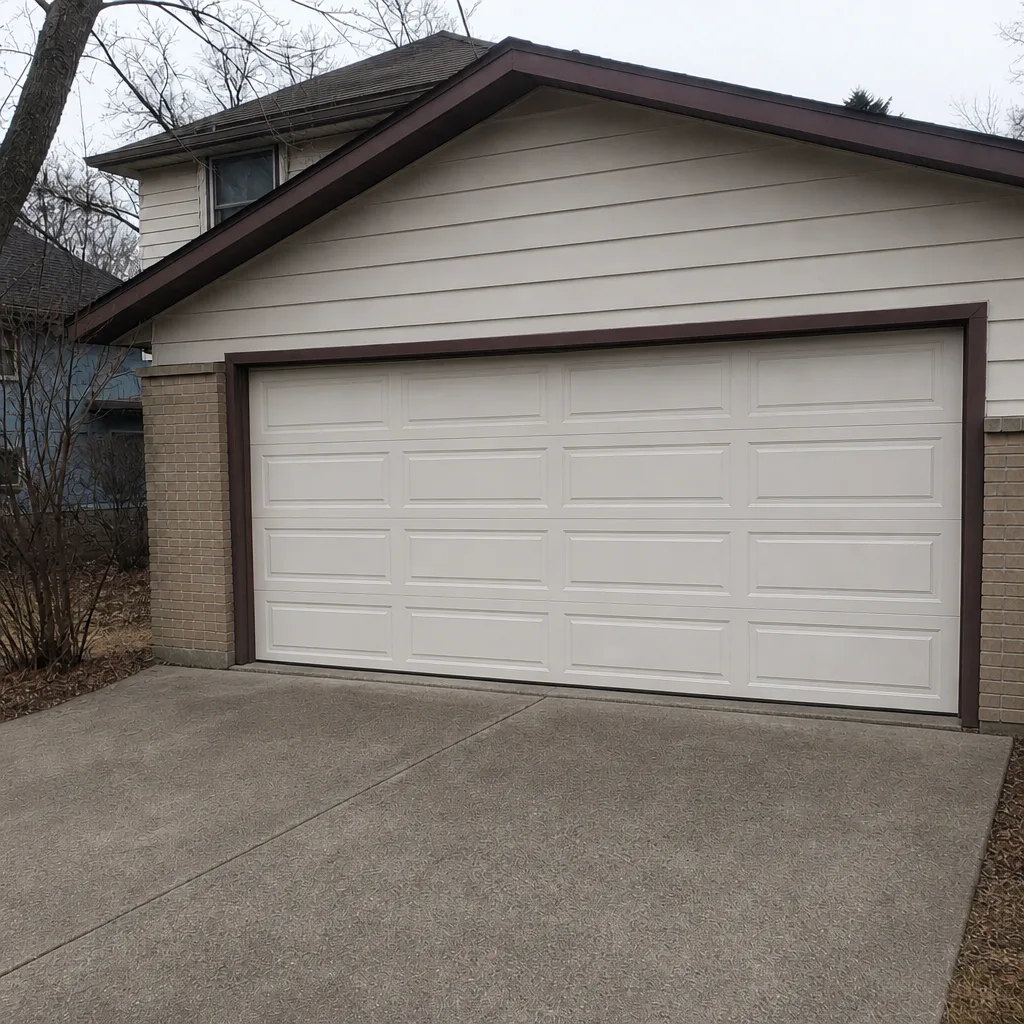 After
When to Call a Professional
Call us when any of the following apply: the door feels heavy to lift, a spring has visibly broken, a cable is frayed or kinked, the door drifts back down after opening, the track is bent or separated, the door won’t close all the way, or the opener has stopped moving the door entirely. Any of those is beyond what a homeowner should touch. If the door is cycling normally but making a new noise, hesitating in the cold, or showing a seal gap, that’s a call to discuss and schedule, and often it’s something we can resolve on the visit. Garage Door Repair Eden Prairie Pros offers free estimates in Eden Prairie. Our technicians have up to 12 years of experience and work with every major brand we’ve listed here, so they arrive knowing your door. Call (888) 505-8601. We answer 24/7. Fast dispatch from 7am to 7pm, Sunday through Friday.
Frequently Asked Questions
The most common warning signs in Eden Prairie are a door that feels unusually heavy to lift, a grinding or squealing noise during travel, uneven travel (one side higher than the other), sluggish movement in cold weather, and a blinking sensor light that keeps the door from closing. Any of these is worth a call, and the first three belong in the “schedule within a week” tier before they become an emergency.
A broken spring gives you a sudden loud bang, a door that is essentially too heavy to lift by hand, and often a visible gap in the coiled spring itself. A weak spring still holds the door but lets it drift back down after opening or makes the opener work noticeably harder than it should. A broken spring is a stop-use-immediately situation. A weak spring is a schedule-this-week situation. Either way, don’t try to repair it yourself. Call (888) 505-8601 for an exact quote, and estimates are free.
Probably not. In most cases a struggling opener is doing work the springs should be doing, which means the real problem is a weakened or broken spring, not the opener itself. Replacing the opener without fixing the underlying balance issue means the new opener will fail much faster. The right first step is to check the door’s balance, and if you’re not sure how, call us. We’ll diagnose it during a free estimate.
Cold weather thickens the grease in the hinges and rollers and slows the opener’s internal mechanisms, so a door that hesitates in January is often just cold. If your door eventually opens fully and closes fully, the symptom is likely temperature-related, not a mechanical failure. If the door feels dramatically heavier or drifts back down, that’s a real spring problem. If in doubt, describe the symptom to us and we’ll tell you which category it’s in. Call (888) 505-8601 for an exact quote.
A blinking sensor light usually means an obstruction in the beam, a misalignment between the two sensors, or a failing sensor. The door is supposed to refuse to close when the beam is broken, so the blinking light isn’t a repair in itself, it’s a normal safety response to something in the way. Check the lenses, clear any object, and realign the two sensors if they don’t face each other cleanly. If the light still blinks with nothing in the beam, the sensor or its wiring needs a look. Call (888) 505-8601 for an exact quote, and estimates are free.
No, not without your agreement. We give you a written estimate before any work begins, and that estimate is the price. If we open something up and find a different problem than the one the symptom suggested, we stop and tell you before proceeding, and the new estimate has to be agreed before we take the next step. You’re never surprised by the invoice after the fact. Call (888) 505-8601 for a free estimate.
We answer the phone 24/7, and for a door that won’t close (a genuine failure, not a warm-weather sensor issue), we can often get a technician out the same day. A call outside dispatch hours is booked into the next opening, Sunday through Friday, 7am to 7pm. If the door is stuck open, we’ll help you secure it safely while we schedule the visit. Call (888) 505-8601.
The Bottom Line
Garage door warning signs are almost never silent. Your door is usually telling you the component, the cost, and the urgency weeks before it stops working entirely. The four big categories are springs, cables, opener electronics, and track and rollers, and the twelve symptoms in this guide map to those categories cleanly. Sort every sign you notice into one of three tiers: stop, schedule, or watch. Distinguish cold-weather behavior from true mechanical failure. If the opener seems to be struggling, check the door’s balance before you spend on a new opener, because that’s the single most costly misdiagnosis in this trade. And leave the springs, the cables, and the bent track to a trained technician. For anything on the stop list, or any sign you’re not sure about, we’re here. Call (888) 505-8601 for a free estimate. We answer 24/7, with fast dispatch from 7am to 7pm, Sunday through Friday. When a symptom turns into a repair, you can learn more about garage door repair, garage door spring repair, and our Garage Door Repair Eden Prairie Pros team before you decide what to do next. One crew, start to finish, on whatever brand of door you own.
Written by the team at Garage Door Repair Eden Prairie Pros.