
Last updated November 22, 2026
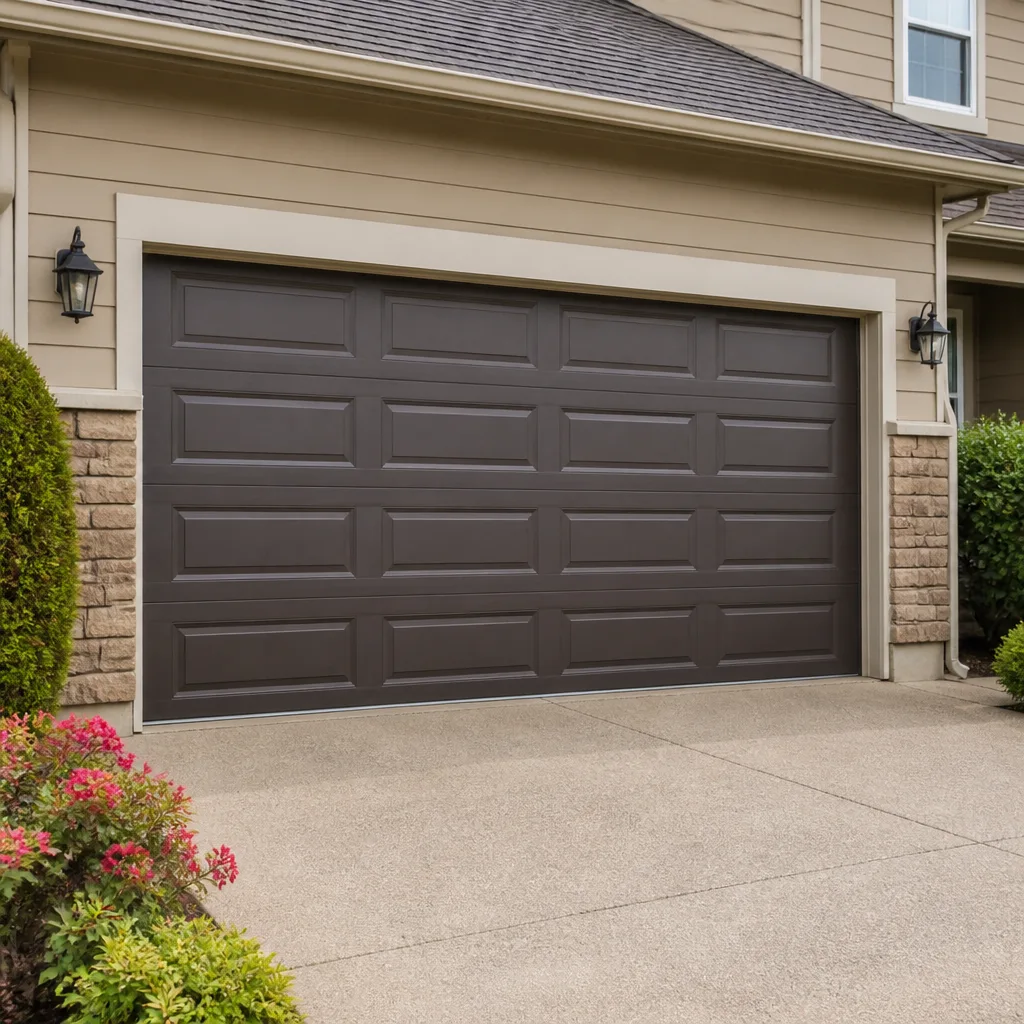 Raised-panel steel
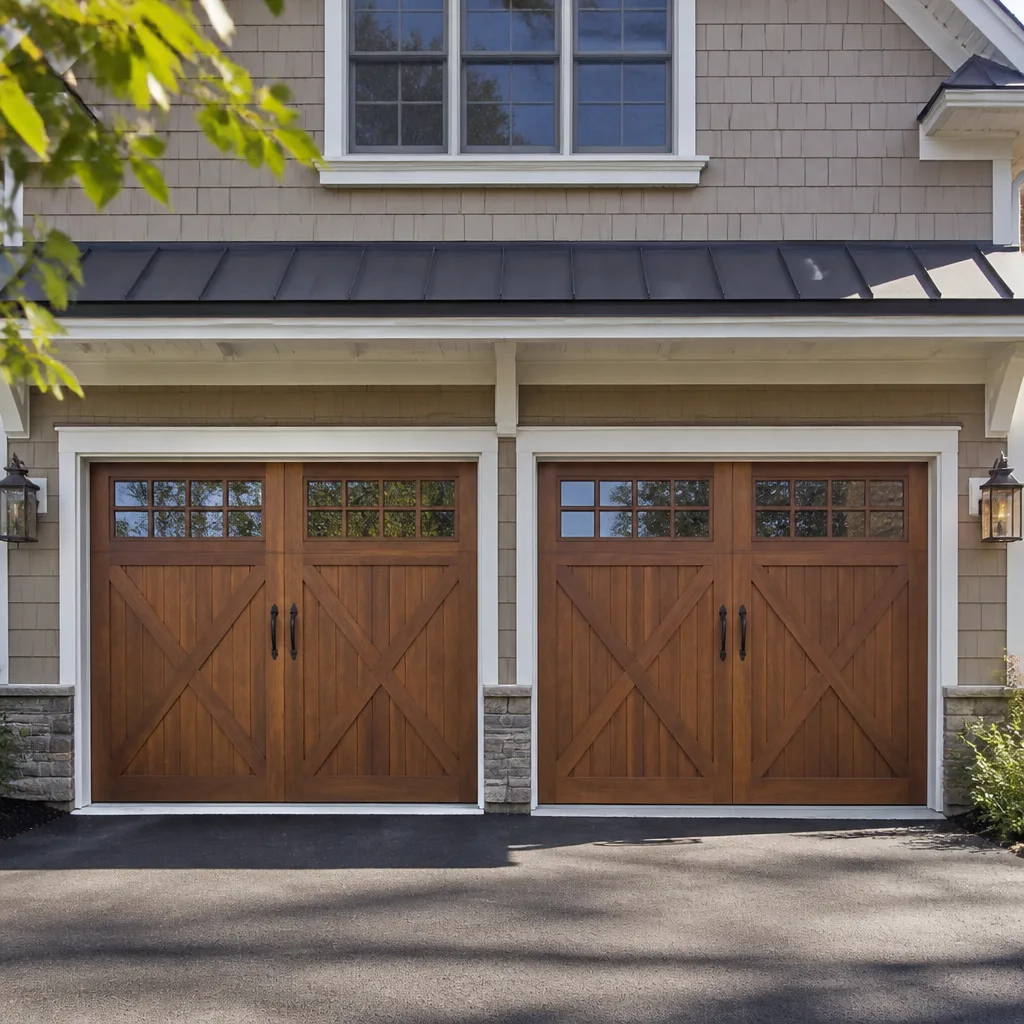 Carriage house
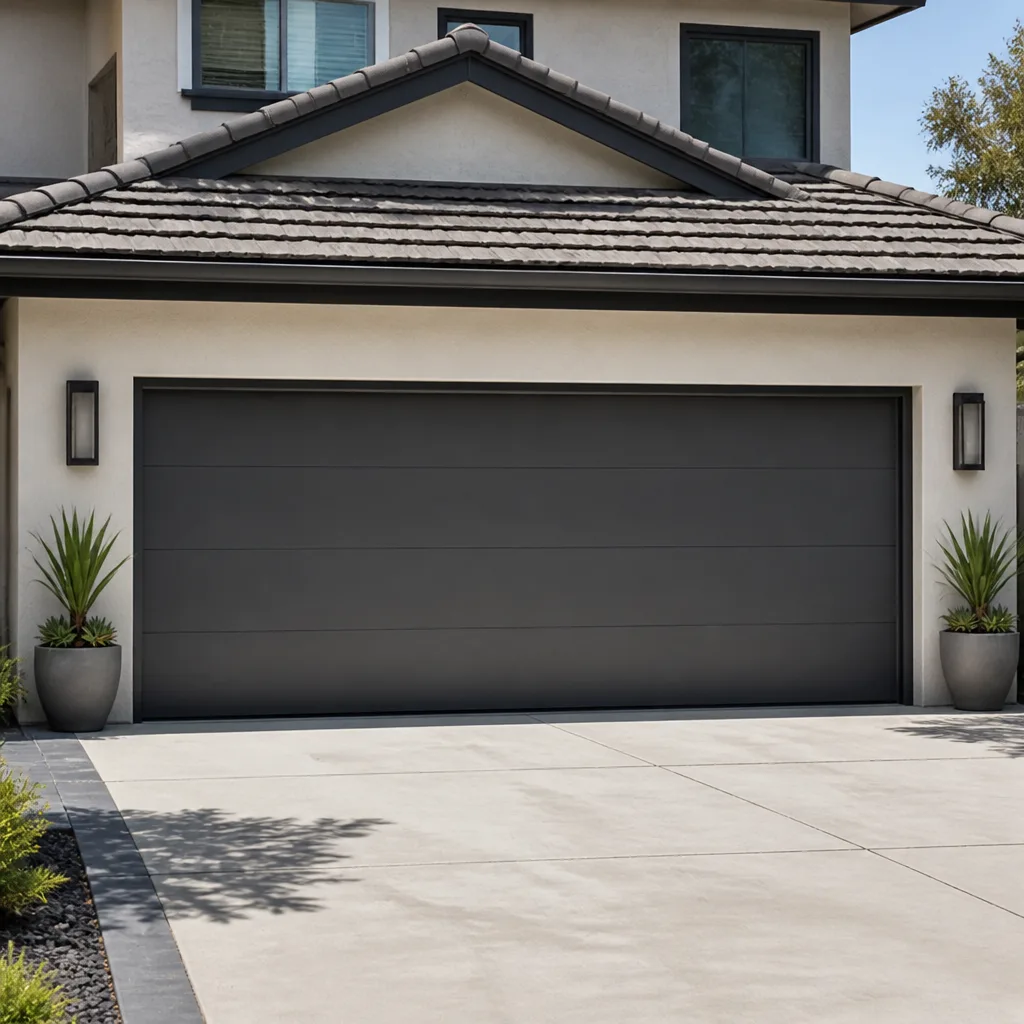 Modern flush
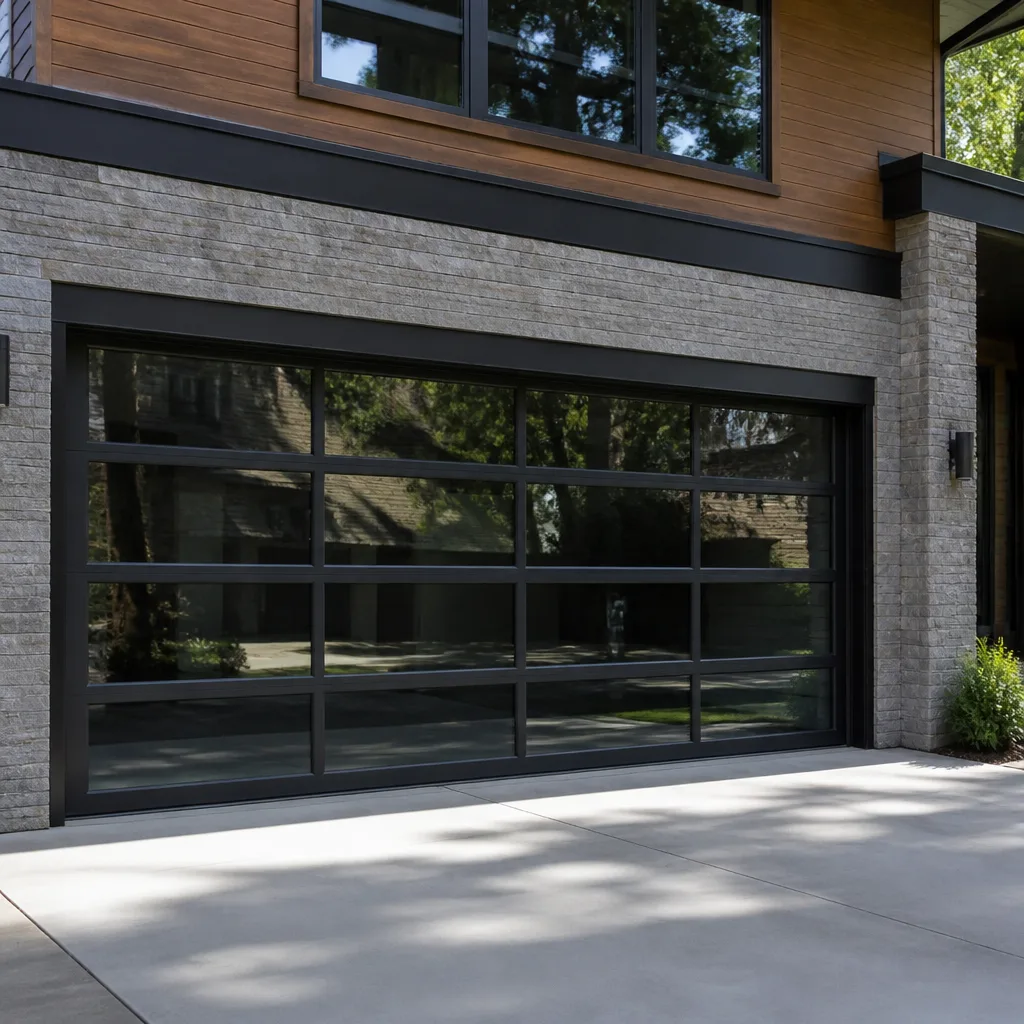 Full-view glass
 LiftMaster openers
 Chamberlain openers
Full 25-point door and opener safety check with every visit - springs, cables, rollers, tracks, and your LiftMaster or Chamberlain opener included
You get a price before we start. It does not change when the pro arrives.
Get your free estimateDIY vs Professional Garage Door: The Eden Prairie Homeowner’s Decision Guide
Torsion springs store enough energy to cause a serious injury in a fraction of a second. But the homeowner who gets hurt isn’t usually the one who tried to replace a spring from scratch. It’s the one who tried to “just adjust” one after watching a video that skipped the safety step entirely. The video showed the turn of a winding bar. It didn’t show what happens when that bar slips.
That distinction shapes this whole guide. The DIY versus professional question gets framed as cost versus convenience, and that frame is wrong. The better question is which specific jobs carry injury risk serious enough that the cost comparison stops mattering, and which jobs a careful Eden Prairie homeowner can genuinely handle. We’ll sort every common garage door task into those buckets, walk through the real math including the costs nobody adds up front, and explain why a Minnesota winter changes the risk picture. You’ll leave knowing exactly where your line is.
Quick Answer
Most garage door maintenance is safe DIY: lubrication, sensor alignment, remote reprogramming, and weather seal replacement. Anything involving torsion springs, cables, or the header bracket is professional-only because those parts hold stored tension that can release without warning. Everything in between, like opener track adjustment or a panel swap, depends on your tools, your comfort level, and the season.
Styles & brands we work with
- Raised-panel steel
- Carriage house
- Modern flush
- Full-view glass
- LiftMaster openers
- Chamberlain openers
Table of Contents
- The Three-Bucket Task Classification
- Safe DIY: What You Can Genuinely Handle
- Proceed With Caution: The Middle Zone
- Professional-Only: Where the Real Danger Lives
- Why Minnesota Winters Create a DIY Risk Window
- The Real Cost Comparison Nobody Adds Up
- What “I Watched the Video” Actually Means for Springs
- When to Call a Professional
The Three-Bucket Task Classification
Every garage door job falls into one of three buckets, and sorting the job correctly before you touch anything is the single most useful skill in this guide. The bucketing isn’t about difficulty. It’s about consequences. A hard job that goes wrong leaves you frustrated. A dangerous job that goes wrong leaves you injured, and no amount of saved money offsets that.
Here’s the classification we use when talking with Eden Prairie homeowners about their doors:
Bucket one: safe DIY. Lubrication, sensor alignment, remote and keypad reprogramming, weather seal replacement, and visual inspections. These jobs involve low force, no stored tension, and clear failure modes. If you get it wrong, the door still works or the seal still leaks a little. Nothing snaps back at you.
Bucket two: proceed with caution. Opener track adjustment, panel swaps, and belt or chain tensioning. These require specific tools and some understanding of how the door’s balance works, but the forces involved are manageable. A careful homeowner with the right instructions can do them. A hurried one can strip a track bolt or crack a panel and turn a small job into a bigger one.
Bucket three: professional-only. Torsion springs, extension springs, cables, and the header bracket. These parts are under tension at all times, including when the door is closed and looks completely relaxed. There is no safe DIY version of this work. The tools alone, primarily proper winding bars, are specialized, and the failure mode is violent.
Knowing the bucket changes the whole decision. You don’t have to weigh “can I do this?” against “should I pay someone?” for every task. You just identify which bucket the job sits in and act accordingly. For Eden Prairie homeowners, that single step prevents most of the injuries and most of the wasted money we hear about.
Safe DIY: What You Can Genuinely Handle
The jobs in this bucket are worth doing yourself. They’re cheap, they’re quick, and doing them regularly genuinely extends the life of the door and opener. Skipping them out of caution is its own kind of waste.
Lubrication is the highest-value DIY task on the list. A garage door has hinges, rollers, and a track that all benefit from periodic lubrication. Use a lubricant made for garage door hardware rather than a general-purpose spray. Apply it to the hinge pivots and roller stems, and wipe the track down rather than coating it. Rollers that move freely put less strain on the opener and wear the door less.
Sensor alignment solves the single most common “my door won’t close” call. The two safety sensors at the base of the track need to face each other with nothing in the beam between them. If the door reverses immediately after starting to close, check that the sensors are aligned and that the small indicator lights on both are steady rather than blinking. A bumped sensor or a spider web across the lens is enough to stop the door. This fix takes minutes.
Remote and keypad reprogramming is a matter of following the pairing instructions for your opener brand. If you have a Chamberlain or Genie opener, the pairing sequence is documented and straightforward. The reason we know this well is that these are two of the opener platforms our technicians work on regularly. The steps differ slightly between brands and generations, and using the right sequence for your model is all it takes.
Weather seal replacement is a genuinely satisfying DIY job in Eden Prairie. The bottom seal on a garage door takes a beating through freeze-thaw cycles, and a cracked or flattened seal lets in cold air, snow, and the occasional small critter. The seal is inexpensive, it slides or screws into the bottom section of the door, and replacing it is a matter of measuring the door width, buying the right profile, and working it into the retainer. This is one of the three jobs Eden Prairie homeowners complete successfully most often.
Visual inspection costs nothing and catches problems early. Once a season, look at the springs, cables, and rollers while the door is closed. Look for rust, gaps, fraying, or a spring that has visibly separated. You’re not fixing anything. You’re deciding whether to call someone, and early is always cheaper than late.
Proceed With Caution: The Middle Zone
The middle bucket is where most DIY garage door projects actually land, and where the decision gets genuinely interesting. These jobs aren’t dangerous the way spring work is, but they’re not trivial either, and a mistake can cost more than hiring the job out would have.
Opener track adjustment is the classic example. If your door binds or the opener strains, the track may be out of alignment. Adjusting it means loosening the mounting bolts, nudging the track, and retightening. The caution here is that the track needs to be plumb and parallel, and “close enough” tends to produce a door that binds worse than before. If you’re adjusting a track on a LiftMaster or Craftsman opener and the door still binds after one attempt, stop. Repeated adjustments can bend the track or strip the bolts.
Panel swaps sit in this bucket too. Replacing a single damaged section on a Clopay or Amarr door is possible for a homeowner with the right tools and a second set of hands, but the panels are heavy, they interlock with the sections above and below, and the door’s balance changes when a panel is replaced. If the replacement panel doesn’t match the weight of the original, the door will behave differently the next time it operates. That’s the point where a job that looked like a swap turns into a balance problem.
Belt and chain tensioning rounds out the bucket. Minor slack adjustment is reasonable. Taking up too much tension, or adjusting the wrong component, can wear the opener motor or the rail. If you’re not certain which part you’re adjusting, the correct move is to stop and describe the symptom on the phone instead.
Our rule of thumb for the middle bucket: attempt it once, carefully, with the right tools. If the first attempt doesn’t solve it, the second attempt is where people break things. That’s the cue to schedule a professional. We handle these adjustments often, and a technician who has the right tools in the van can usually resolve the issue in a single visit. For a full breakdown of what that kind of visit looks like, see our garage door repair page.
Professional-Only: Where the Real Danger Lives
This is the bucket where the cost comparison stops being relevant. Not because the work is expensive, but because the failure mode is serious enough that the money question is answered before you finish asking it.
Torsion springs sit above the door on a metal shaft and do the heavy lifting of raising the door. They are wound under enormous tension at installation, and that tension stays there permanently. Replacing one requires releasing that tension in a controlled way, installing the new spring, and rewinding it to the correct number of turns. The tool for this is a winding bar, and the wrong tool, or the right tool used wrong, is what sends people to the emergency room.
Extension springs sit alongside the door on the horizontal tracks and stretch rather than twist. They’re easier to reach than torsion springs, which makes them look easier to replace. They aren’t. An extension spring releases stored energy the same way a torsion spring does, and a stretched spring that lets go can cause serious harm. The safety cables that run through the center of extension springs exist specifically because of this failure mode, and worn or missing cables are a reason to stop, not to improvise.
Cables run from the bottom corners of the door up to the drums at the top. They’re under constant tension and they’re made of braided steel that develops sharp frayed ends as it wears. Cutting or releasing a cable the wrong way, even on a door with the springs already relaxed, can whip the cable and injure the person working on it. Cables are not a homeowner job under any circumstance. For a dedicated look at spring and cable work, see our garage door spring repair page.
The header bracket mounts the torsion assembly to the wall above the door. It’s a structural mounting point, and getting it wrong means the whole spring assembly is holding on by less than it should. This is professional work, full stop.
Here’s the thing worth internalizing. The homeowner who gets hurt in this bucket is rarely the one who decided to replace a torsion spring from scratch. Most people know better than that. The injury usually comes from the smaller job: adjusting a spring that looks slightly off, or trying to give a door “a little more tension” because it feels heavy. The spring doesn’t distinguish between a full replacement and a quick adjustment. It releases either way.
Why Minnesota Winters Create a DIY Risk Window
Garage door hardware behaves differently in a Minnesota winter, and that difference matters more for DIY decisions than most homeowners realize. Cold changes how components respond, and the failures tend to be sudden rather than gradual.
Metal contracts in cold weather, which changes the tolerances between moving parts. In an Eden Prairie garage that isn’t heated, the door, track, and hardware operate at temperatures well below what the manufacturer tested them at. Lubricants thicken and don’t flow the way they would in summer, so rollers and hinges that felt smooth in October can bind in January. A door that’s been marginal all fall tends to fail outright on the first genuinely cold morning.
The bigger issue is that cold makes springs and cables more brittle. A spring that’s been slowly wearing all season is less likely to give warning in cold weather. It tends to fail in a single event, usually when the door is moving, which is exactly when you’re standing near it. And when a spring fails, the door becomes very heavy very quickly.
The freeze-thaw cycle adds another layer. Eden Prairie sits in a climate that swings above and below freezing repeatedly through winter, and every cycle moves moisture into and out of the door’s hardware. That’s why the bottom seal takes so much abuse, and why the rollers and hinges benefit from winter lubrication. It’s also why an ice dam at the door’s base, or a door that’s frozen to the floor, is a bad moment to try to force the opener to move it. Forcing a frozen door strains the opener and puts stress on the springs at the exact moment they’re least forgiving.
The practical takeaway for DIY work: whatever you were planning to attempt, do it before the first hard freeze if you can. If the door is already behaving differently in cold weather, that’s a sign to have it looked at rather than to push harder on it. A door that needs more force to open in January than it did in September has a problem that cold exposed, not a problem that cold created.
The Real Cost Comparison Nobody Adds Up
The DIY calculation most people run is parts versus professional labor. That’s the wrong calculation, and the gap between the two is where most of the money actually goes.
Here’s what the realistic comparison looks like:
- Tool acquisition. Garage door work requires specific tools, and the less common ones are where DIY costs balloon. If you’re doing spring work, proper winding bars are mandatory, and improvising with screwdrivers or a length of rebar is exactly how injuries happen. If you’re doing track or panel work, you may need clamps, the right sockets, and a second ladder. Tools you buy for one job don’t disappear from the total.
- Retail versus trade pricing on parts. A homeowner buying a replacement part at retail pays a different price than a professional buying through trade channels. On a small job the gap is modest. On a larger one, it narrows the price difference between DIY and professional more than people expect.
- The callback cost. This is the line item nobody budgets for. If a DIY repair causes a secondary problem, you pay for the original attempt plus the professional visit that fixes both problems. A misaligned track that bends a panel, or a spring adjustment that damages a cable, converts a cheap job into a bigger one. The callback cost is the most common way a DIY decision ends up more expensive than hiring the job out.
- Access and safety equipment. Spring and header work happens above the door. That means a stable ladder, good lighting, and a clear work area. Most homeowners have some of what they need but not all of it, and the gap is either rented, bought, or skipped. Skipping it is the expensive option.
- Your time. Not just the job itself, but the research, the trips to the hardware store, and the troubleshooting when it doesn’t go right. A task that takes a professional an hour can consume a weekend of a homeowner’s time, and that weekend has value even if it doesn’t show up on a receipt.
Add those up and the picture shifts. DIY on the safe bucket is genuinely cheaper and worth doing. DIY on the middle bucket is roughly break-even if it goes well and clearly worse if it doesn’t. DIY on the professional-only bucket isn’t a cost comparison at all, because the risk of injury outweighs the savings at any price. If you’re weighing that decision for your own door, our team at Garage Door Repair Eden Prairie Pros can walk you through what your specific job involves before you commit to either path.
What “I Watched the Video” Actually Means for Springs
The video makes it look mechanical and calm. Winding bars go in, the technician turns them, the spring relaxes, a new one goes on, and everything is fine. What the video doesn’t show is how much energy is stored in that spring, or what happens when the stored energy is released without control.
Here’s the plain-language version. A torsion spring on a typical residential door has to lift most of the door’s weight across the door’s full travel. To do that, it’s wound dozens of times during installation. That winding stores energy in the spring the same way winding a clock stores energy, except the spring holds enough of it to lift a grown adult. It holds that energy all the time. Not just when the door is moving. Not just when the door is open. All the time, including right now with the door shut and the spring looking perfectly still.
To replace the spring, someone has to release that stored energy deliberately and slowly, using bars inserted into the winding cones. The bars are the brake. If a bar slips, if the wrong tool is used, if the spring is turned the wrong direction, or if the winding cones aren’t engaged properly, the energy releases instantly instead of gradually. There’s no warning between the moment the bar slips and the moment the spring unwinds. The spring is also under enough load that the winding cones can become projectiles when the tension releases.
That’s the part the videos skip. They show the process with a trained hand doing the work and edit out the risk, and the homeowner watching at the end thinks the job is about following steps in the right order. It isn’t. It’s about managing stored energy, and the margin for error is narrow and unforgiving.
This is why we treat spring work as its own specialty rather than a general handyman task. The technicians who handle it have done it enough times to know how a spring feels at each stage and how to recognize when something’s off before it becomes dangerous. That kind of judgment doesn’t come from watching a video. It comes from training and repetition. Our technicians have up to 12 years of experience, and spring repair is exactly the kind of job where that experience matters most. For a deeper look at the different spring types and how each one is handled, visit our garage door spring repair page.
What Happens When You Call
Knowing when to call is one thing. Knowing what to expect when you do makes the call easier. Here’s how it works with us.
When a door fails, call and describe what you’re seeing. A broken spring, a door that won’t close, a door that opens partway and reverses, an opener that hums but doesn’t move the door. The more specific you are, the better the visit that follows. We answer 24/7. If your call comes outside dispatch hours, we’ll book you into the next opening, Sunday through Friday, 7am to 7pm. Fast dispatch from 7am to 7pm means that in most cases we can have a technician to your Eden Prairie home the same day.
That matters more than it might sound. A garage door stuck open overnight is a security problem. A door that won’t open means the car stays in the garage and the day gets rearranged. Emergency garage door service is part of what we do, not an add-on, and the technicians who respond are trained on the brands you’ll actually have at your house.
Our technicians are familiar with eight major garage door and opener brands, including LiftMaster, Chamberlain, Genie, Clopay, Amarr, Wayne Dalton, Craftsman, and Raynor. That familiarity means someone arrives already knowing how your door and opener are built rather than learning on the spot. If your opener is a LiftMaster or Chamberlain, or your door is a Clopay or Amarr, the diagnosis starts from a known product. For opener-specific issues, our garage door opener repair page covers the common symptoms and what they mean.
One crew handles the whole job, from the opener electronics to the panels to the springs. You won’t be calling a different contractor for each piece of the system, and you won’t be told a repair you need isn’t the kind of work someone does. If your door needs a full replacement rather than a repair, that’s covered too.
How the diagnosis and quote work
- You describe the symptoms on the phone and we book the visit.
- A technician inspects the door and opener and identifies what’s actually wrong, including anything the symptoms didn’t reveal.
- You get a written estimate before any work starts. The price is quoted and agreed up front, and it doesn’t change after the fact.
- Work happens in the same visit in most cases, using parts for your brand.
- You get a walkthrough of what was done and any maintenance worth planning for.
See the difference
 Before
 After
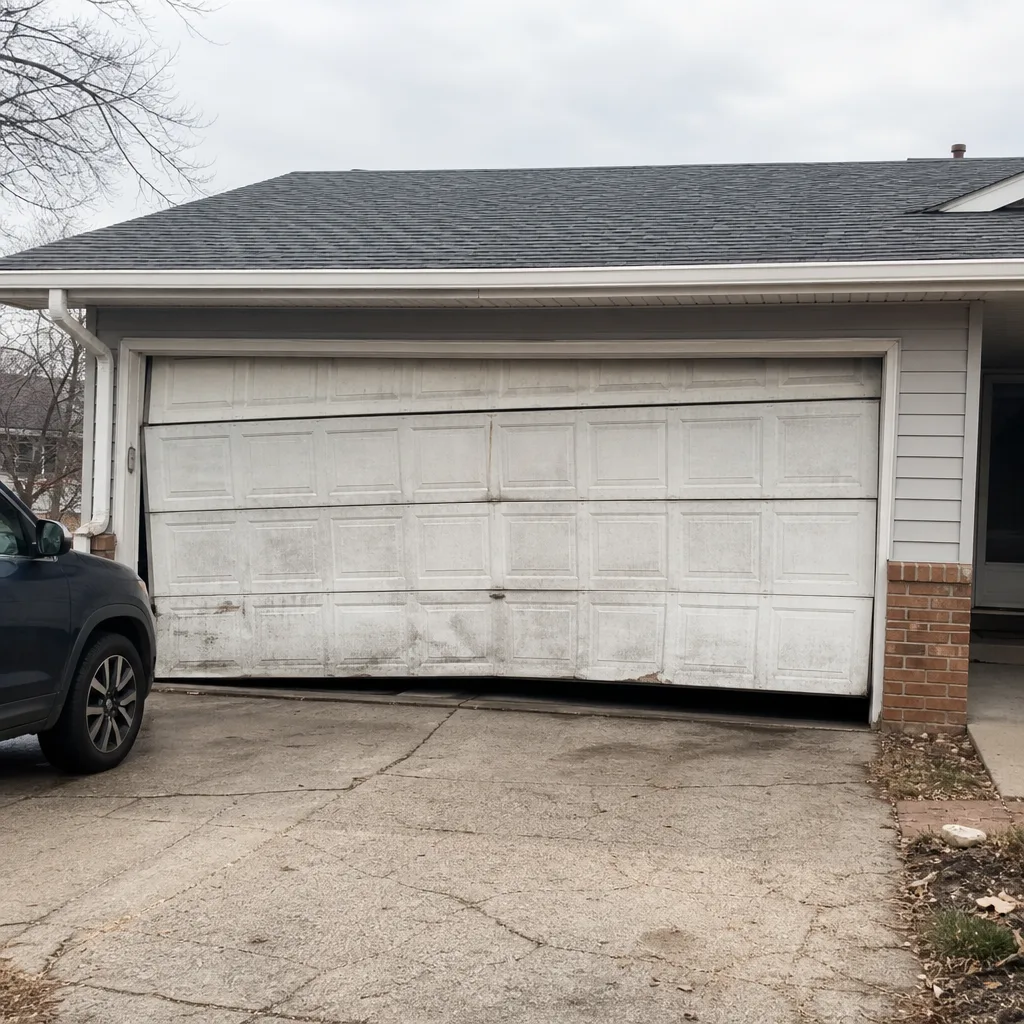 Before
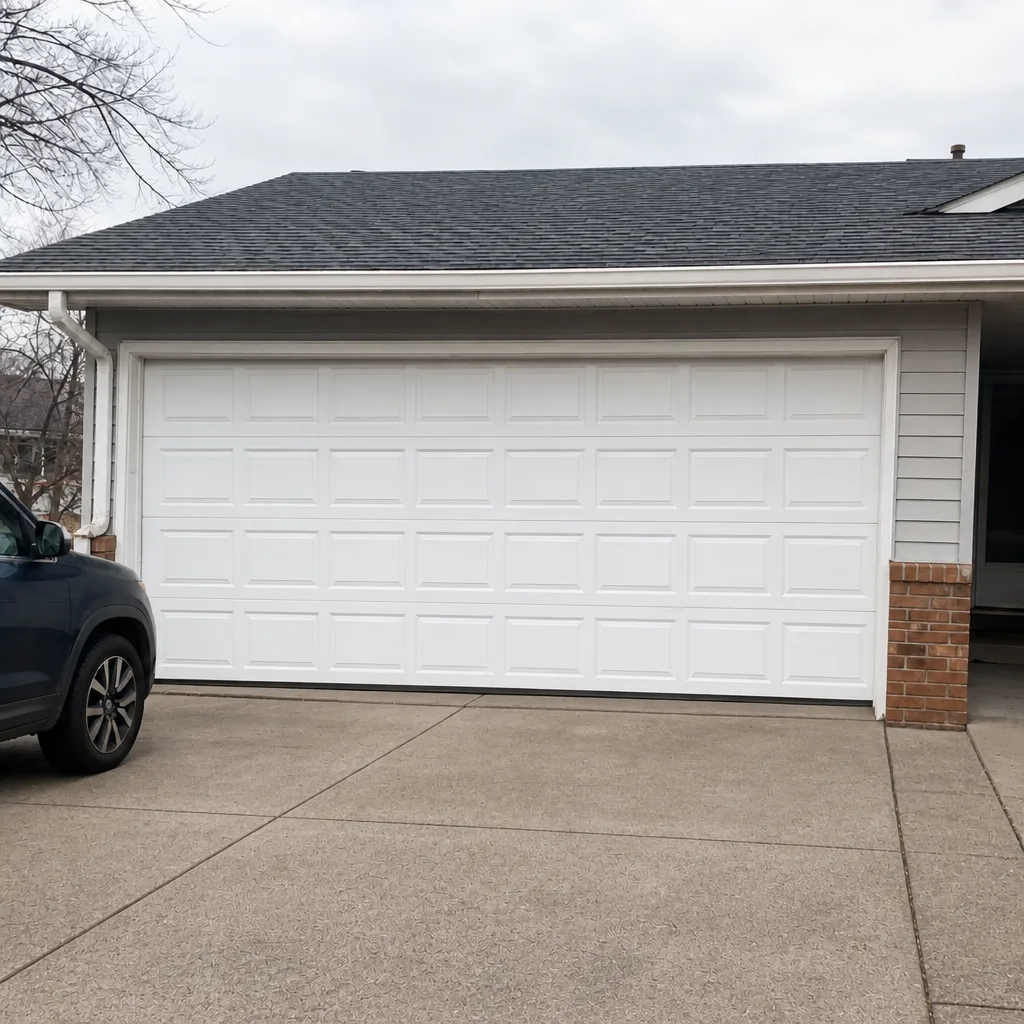 After
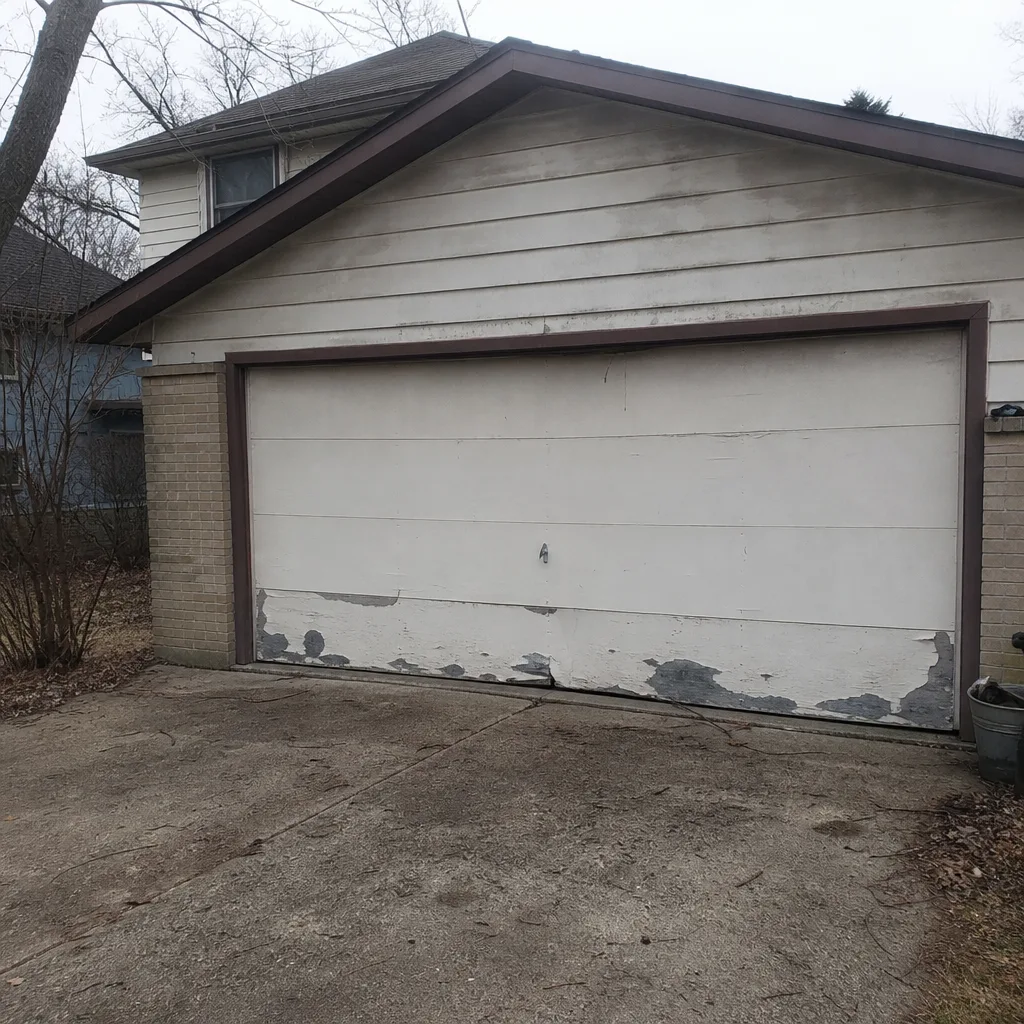 Before
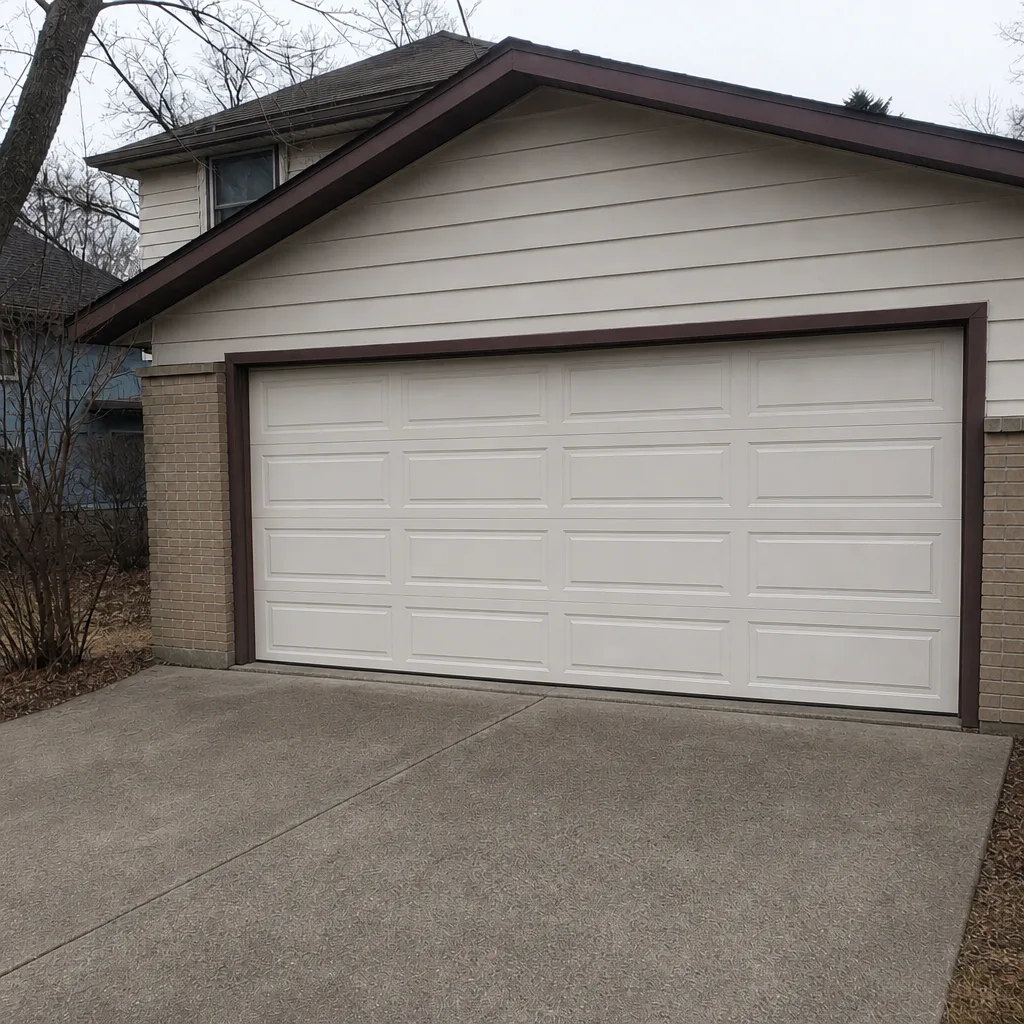 After
Common Mistakes to Avoid
- Improvising spring tools. Screwdrivers and lengths of rebar are the wrong tool for winding a torsion spring, and they’re what people reach for when they don’t have winding bars. The tool is the safety. If you don’t have the right tool, you don’t have a safe way to do the job.
- Adjusting a spring instead of replacing it. A door that feels heavy gets “a little more tension” from a homeowner who’s watched a video. That adjustment is the exact scenario where serious injuries happen, and it doesn’t solve the underlying wear anyway.
- Repeatedly retrying a track adjustment. One careful adjustment is reasonable. After that, each retry bends the track and strips bolts, and the door ends up worse than it started. If the first attempt doesn’t work, stop.
- Skipping winter lubrication. In Eden Prairie, the cold months are when lubrication matters most and when it’s easiest to forget. Thick, dry hardware binds in cold weather and strains the opener.
- Forcing a door that’s frozen to the floor. After an ice storm, a door can freeze at the seal. Operating the opener against that resistance strains the opener and stresses the springs at the least forgiving moment. Unfreeze slowly before trying to lift.
- Buying a replacement part without confirming the match. A Clopay panel from a different generation won’t fit the way the original did, and a spring with the wrong rating changes the door’s balance. Confirm the specific model before ordering.
- Waiting on a broken spring. Running an opener that’s been matched to a good spring while the spring is broken overloads the motor and puts a lot of strain on the cables. If a spring has failed, stop using the door and get it looked at.
When to Call a Professional
Call a professional when the job is in the third bucket: torsion springs, extension springs, cables, or the header bracket. Call when a middle-bucket job didn’t work on the first careful attempt. Call when a door that used to operate smoothly starts behaving differently in cold weather. Call when a spring is visibly broken, when the door feels suddenly heavy, or when the opener strains to move it. Call when a door is stuck open and you can’t secure it, or stuck closed and you can’t get out. Call when the door is frozen and force isn’t moving it.
Garage Door Repair Eden Prairie Pros offers free estimates in Eden Prairie, and we handle repair, opener work, springs, and full installation under one call. We answer 24/7 and dispatch from 7am to 7pm, Sunday through Friday. The price is quoted and agreed before any work starts. When the job can’t wait, call (888) 505-8601.
Frequently Asked Questions
No. Torsion and extension springs hold stored energy at all times, and releasing that energy incorrectly can cause serious injury in an instant. Replacing a spring requires proper winding bars and the judgment to know how a spring should feel at each stage. There is no safe DIY version of this job, and the risk doesn’t go down because the door is closed or the spring looks relaxed.
Lubrication, sensor alignment, remote and keypad reprogramming, weather seal replacement, and visual inspections are all safe for a careful homeowner. These jobs involve low force and no stored tension, so a mistake doesn’t cause injury. Opener track adjustments and panel swaps are possible for a homeowner with the right tools, but they belong in a middle bucket where one careful attempt is the limit before calling a professional.
The cost depends on what’s actually wrong, which is why we inspect before quoting rather than estimate over the phone. What you can count on is that a written estimate is agreed before any work begins, and the price doesn’t change once the job starts. Call (888) 505-8601 for an exact quote. Estimates are free.
In most cases, yes. We answer 24/7 and dispatch from 7am to 7pm, Sunday through Friday, so calls that come in during dispatch hours can usually be handled the same day. If a call comes in outside those hours, we’ll book you into the next opening, Sunday through Friday, 7am to 7pm. Call (888) 505-8601 to get scheduled.
No. The technician inspects the door, identifies what’s wrong, and gives you a written estimate before any work starts. That estimate is the price. If the diagnosis turns up something beyond what the symptoms suggested, you’ll hear about it before anything is done, not after.
The local professionals we connect you with are licensed and insured as their state requires. Our technicians have up to 12 years of experience, including the brand-specific work that matters most: LiftMaster, Chamberlain, Genie, Clopay, Amarr, Wayne Dalton, Craftsman, and Raynor. Call (888) 505-8601 for a free estimate.
The Bottom Line
The DIY versus professional question is really a question of which specific job you’re looking at. Lubrication, sensor alignment, remote reprogramming, and weather seal replacement are worth doing yourself and keep the door healthy. Track adjustments and panel swaps are worth one careful attempt, then worth calling in. Springs, cables, and the header bracket are never DIY, because the stored energy involved makes the cost comparison irrelevant. In Eden Prairie, Minnesota winters compress all of this, since cold changes how hardware behaves and tends to produce sudden failures rather than slow ones. Sort the job into the right bucket before you start, and the decision makes itself.
If you’re not sure which bucket your job belongs in, call us. We answer 24/7, dispatch from 7am to 7pm Sunday through Friday, and quote the price before any work starts. Call (888) 505-8601 for a free estimate.
Written by the team at Garage Door Repair Eden Prairie Pros.